
You know what they say – if you don’t schedule time for maintenance, maintenance time will be scheduled for you. Sometimes the rest days sneak up…
NEXT WEEK’S LONG RUN? THINK AGAIN
Ain’t it always the way? I go a solid couple months of training without injury and dare to think “this is going well!” … and then immediately hurt myself.
The way I did it this time was extra stupid, too. I didn’t even do anything really. I was literally just standing there, pondering. Then my brain decided to focus solely on my train of thought and abandon supervision of my physical body entirely for a second. I almost fell over; my knees snapped straight to keep me upright; and I hyperextended my collateral ligaments, particularly the left inside one.

You may have heard the persistent myth that running is bad for your knees. Divorced from further context, this is nonsense. However, running can be demanding of your knees, and I had zero interest in making a bad problem worse. Suddenly I was looking at a week or two of unscheduled rest. Complete rest, for that matter, at least for a little while. Even strength training puts some stress on your knees, and I needed to lead with healing.
Thus began one of the greatest challenges of my athletic career: overcoming my natural crankiness and developing
JENN’S THREE-POINT PLAN FOR ENJOYING UNPLANNED REST DAYS
My first reaction was, obviously: UGH.
But I also knew that if I wanted to embark upon my traditional vacation run streak in two weeks I was going to have to do it. So then I thought, how can I reframe my mindset so that I can actually – kinda sorta – the smallest bit – enjoy my surprise rest days?

The key was to achieve a balance between activities that made me feel productive in the realms of holistic health without allowing the internal pressure to exercise to push me back in the saddle too fast. Ultimately I chose to prioritize three main categories of wellness.
POINT ONE: SLEEP
The first prong was easy; I immediately dialed in on sleep. I LOVE to sleep! Heck, I might even go so far as to call sleep a favored hobby. Yet I normally get up no later than 6am so as to have time to run or strength train before work. And while I do love sleeping, I am not good at the falling asleep part. End result being that I rarely get a solid night’s shuteye.
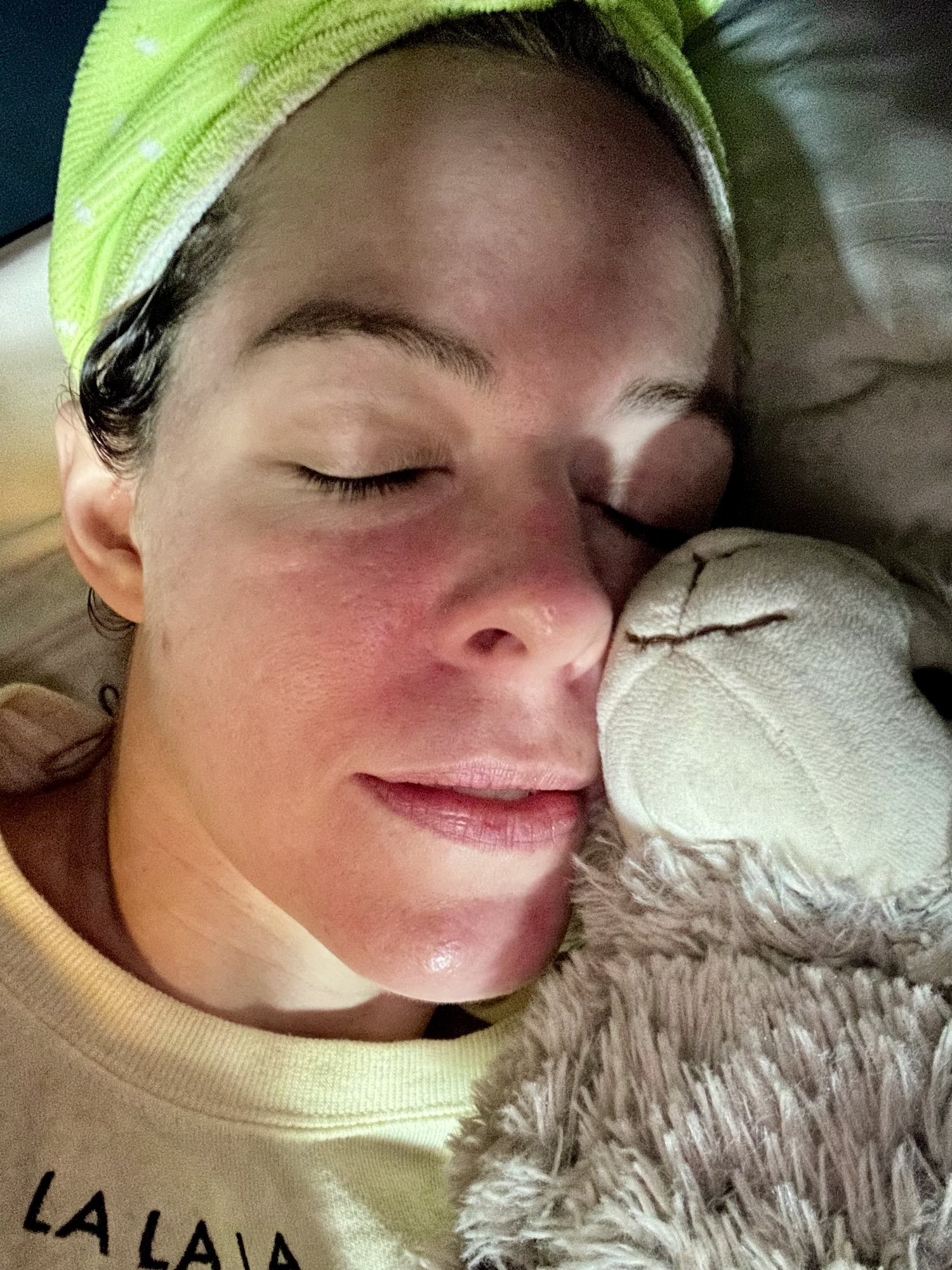
I pulled my knee ligaments on a Wednesday night. Thursday through Sunday, I did nothing but ice my knee and chill, which meant no early morning workouts – and I slept in! Got 8+ hours every night and it was glorious.
Not only did it feel great, it was also great for me… and my fitness. Sleep is important for your metabolism, strengthens your immune system, properly cycling your hormones, and more. Most crucially for my injured state, sleep is your body’s ideal time to heal and repair. Win!
POINT TWO: NUTRITION
Okay, this next one is to be practiced CAREFULLY, especially if you have a history of disordered eating. But if it feels like a good fit for you, prolonged rest periods can be a good time for a calorie deficit – always assuming, of course, that losing weight is something that you’re interested in. Since you’re not burning nearly as many calories as you would when running and cross-training, you don’t need to worry about fueling.
I DO have a history of disordered eating, but I have also worked hard to, to use the common vernacular, heal my relationship with food. You’re never really done with that sort of recovery, but I did feel reasonably comfortable dialing back my food take a bit while in my initial, doing-absolutely-nothing segment of my rest. I made sure to do it my way, with no calorie counting.

Normally I try to eat intuitively, letting my instincts dictate what I need. In this case, all I did was skip a few snacks and desserts (just a couple pieces of chocolate and similar) and slightly reduce portion sizes. Nothing crazy!
Once again, this prong is only for if you are interested in potentially dropping a little bit of weight. If this isn’t a goal of yours or you’re not sure you can do so safely – for any reason, physical or mental – ignore it. Should you happen to have a legitimate nutritionist available to you, so much the better.
POINT THREE: EXPLORING NEW WORKOUTS
After those four days of ice and complete rest, I felt my knee had improved enough that I could ease back into some non-running workouts. My shoulders-and-arms and chest-and-back workouts were pretty low risk for obvious reasons. Ditto abs. That still left a couple of days in the week blank, though.
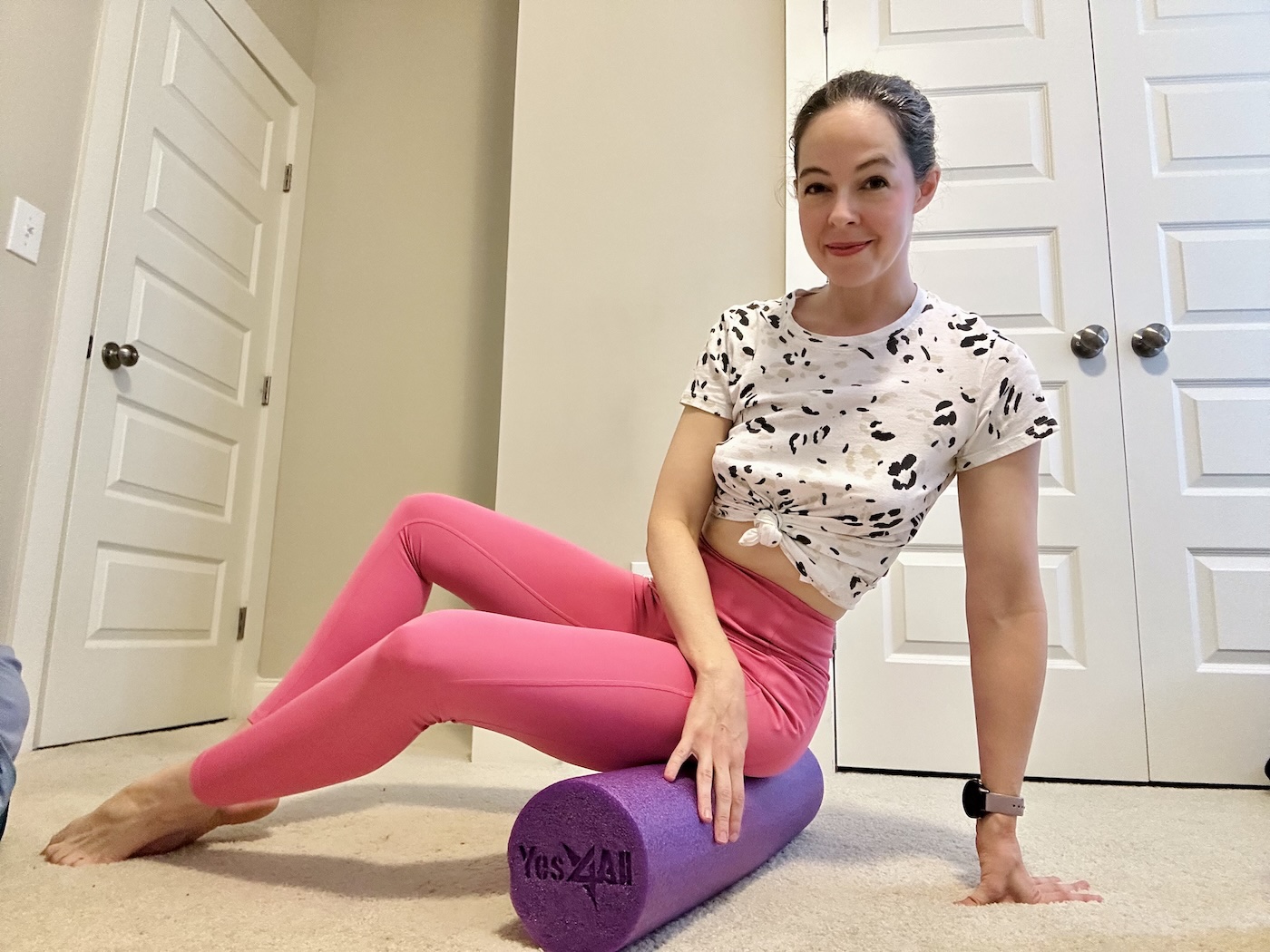
Rather than simply repeat a workout or revert to nothing (although that’s okay if you want to!), I decided to nose around on the internet and pick out some exercises that were new to me. One morning I did a hybrid yoga workout, which was great because all those balance postures helped with my stability. On two other occasions I cobbled together a series of movements from various PT Instagram accounts that targeted my legs, but more gently than usual. I ditched weights and put emphasis on the slow, gentle, and rehabilitating. If anything didn’t feel right, I would simply stop and try something else. It’s good to mix it up now and again!
YOU CAN REST AND LIKE IT, I PROMISE
I’m not gonna lie: I would’ve liked it best if I’d never injured my knees in the first place. Alas, these things happen. And I don’t know about you, but I often find that the hardest part of dealing with a mild-to-moderate injury is the mental part. I don’t want to rest; I want to run!!!

Still, I know that those days will inevitably come where I must rest against my will. Realistically, I know the bell tolls for me. When it does, it helps to know I have a plan in place to effectively manage my time off. Feel free to steal and adapt this guide for when the bell tolls for you!
Don’t forget, you can follow FRoA on Threads @fairestrunofall and on Instagram @fairestrunofall. If you have any questions or thoughts, leave a comment or email fairestrunofall@gmail.com. See ya real soon!